Me gusta leer y ver la tele

Saturday, February 07, 2009

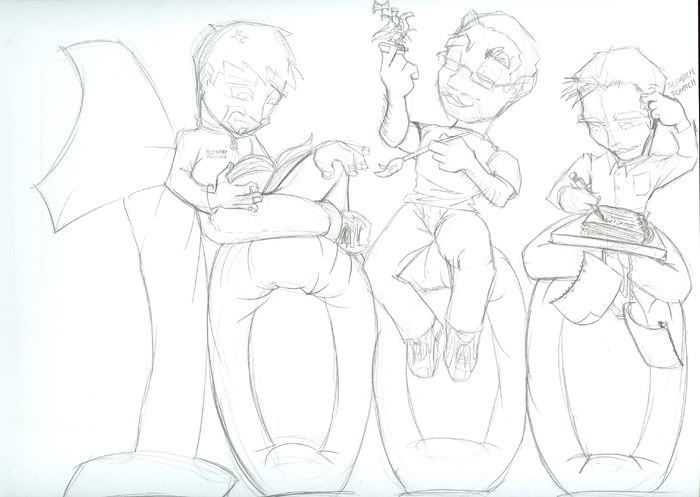
Mil (1,000)

Por si el título de esta entrada y el dibujo que la acompaña no son lo suficien-
temente explícitos, dejad que os lo deletree, queridos lectores: ¡éste es el post número mil en Sunny Jhanna! Como lo oís, amigos. Desde el cinco de noviembre de 2005, a los Blogueadores Oficiales del Reino de Jhanna se nos han ocurrido mil tonterías diferentes con que entreteneros día sí y día también. Así pues, me parece pertinente que nos detengamos por unos segundos y nos demos unas afables palmaditas en nuestras respectivas espaldas. ¡Buen trabajo!

Y como bonus, aquí tenéis la versión a lápiz antes de entrar a matar con los rotuladores. Enjoy!

Friday, February 06, 2009

Broken Novel

I read Altered Carbon by Richard K. Morgan three years ago, and I found it an exhilarating novel. Morgan created a futuristic world that was vivid and compelling, and populated it with great characters, especially former Envoy Takeshi Kovacs. The book was gritty, hard-boiled, imaginative, full of new ideas and original blends of old ones. It was a terrific read, and I recommend its mixture of sci-fi and crime noir to everyone.

I read Broken Angels, the second outing of good ole Kovacs, last week, and like I said then, it was a crushing disappointment. However, and judging by the Amazon customer reviews, I seem to be one of the very few who didn’t enjoy this book. Why didn’t I like it?

To begin with, BA is so much different from AC as to seem it was written by a different person. Remember all the good things I said of AC two paragraphs ago? Well, none of those qualities can be found in BA. Not. Even. One. The story in BA is so derivative sci-fi that its own lack of originality made it hard for me to stay invested in what I was being told. The plot was trite, the story something we’ve seen a thousand times already. Kovacs is now in an army of sorts, and this book is about war and an expedition to recover an ancient artifact that belonged to a different species. There is no blend of genres, just a shoot’em up story. There is no intrigue, no mystery, no exploration of a world full of possibilities.

Then we have the characters. Takeshi Kovacs is still a cool cat, a cynical know-it-all who has seen it all, done it all, but he chooses to be around what has to be the least-compelling cast of characters I have encountered in a novel in the last several years. A bunch of almost indistinguishable and definitely unremarkable special ops soldiers are introduced, and try as I might, I just couldn’t get myself to care about any of them. The best ones were probably Tanya Wardani and Matthias Hand (civilians both of them), and the best parts of the book are the conversations between Kovacs and either one of those two. Other than that, stuff went on (not really: this is such a slow-paced book) and I just didn’t care.

The sex scenes that were vibrant and wildly imaginative in AC feel dull and perfunctory in BA. They seem to be there just to be there, because the readers expected them, and they bring nothing new under the sun, unlike the drug-enhanced encounters from Morgan’s previous novel.

Everything in BA, to sum it up, felt kind of meh, and except for good dialogue and cool one liners from Kovacs, the whole book is pretty much disposable and certainly skippable. There is a third Kovacs book out there, Woken Furies, but I’m not sure I want to read it anymore, not after having suffered through BA. If you are interested, though, I would suggest skipping Broken Angels and reading WF instead, since I doubt it will be worse than this. And if it is, then, well, Mr. Morgan, it’s been nice knowing you.

Thursday, February 05, 2009

Do What They Wanna Do

Ésta es la historia de un dibujo que acabó siendo peor de lo que podría haber sido por culpa de las prisas con que acabé haciéndolo. Resulta que me invitaron a la fiesta de cumpleaños de una amiga el día anterior al evento, y no sabía qué hacer. Pensaba regalarle una postalita y punto, pero pensé que podía esforzarme un poquito más y dibujar algo. Tras hablar con un par de amigos comunes, decidí hacer un dibujo de La familia Addams. Nunca había dibujado a ningún miembro del clan, así que me fui a Internet y me puse a buscar fotos y dibujos. Se me ocurrió que podía usar un estilo que estuviera a medio camino entre el estilo del creador de los personajes, Charles Addams, el mío propio, y la apariencia de los actores de la adaptación cinematográfica. El problema es que, entre unas cosas y otras, me encontré empezando el dibujo dos horas antes de cuando se suponía tenía que estar en su casa, con lo que me tocó trabajar lo más rápidamente posible, sin poder poner demasiada atención en los detalles o pararme a pensar, revisar y retocar. Una lástima, porque creo que podía haber quedado mejor si hubiera podido invertir un par de horas más en el dibujo. De todas formas, me gusta cómo me quedaron Morticia, Miércoles y Cosa. Y a fin de cuentas, la interesada quedó impresionadísima, así que supongo que debería estar contento, pues ése era el objetivo, ¿no?

Wednesday, February 04, 2009

Three Thors

I've found myself reading a bunch of Thor comic books recently. I don't think I had ever read anything starring the Norse God of Thunder, and a friend of mine let me borrow three different graphic novels.

The first one, Avengers Disassembled: Thor, collects the Ragnarok storyline that put an end to the Thor ongoing series a few years ago. Both my friend and lots of other fans had raved about how cool Ragnarok was, so I thought I'd check it out. And I didn't quite like it. The problem was that Michael Avon-Oeming's writing was sort of cheesy, and his "epic" narrative was actually sort of lame and expository. The idea behind Ragnarok, the end of days for the Norse gods is really cool, but Oeming's take on it is just a succession of battle after battle after battle that left me indifferent. Which is exactly how the generic-looking artwork by Andrea DiVito made me feel. I just couldn't care about what was going on.

Somewhat dispirited, I moved on to the first volume of the new Thor series, and what a pleasant surprise it turned out to be. The script by J. Michael Straczynski is crisp, the dialogue good, Thor's quest compelling. And Olivier Coipiel's artwork is great. In this book, Thor actually looks like a Norse god instead of a generic blonde dude with a winged helmet and a silly hammer. His Thor is regal, imposing, and tough as nails. He is an enemy I would fear and an ally I would treasure.

The third collection I read was the Secret Invasion tie-in, a series that reverted to the Ragnarok story in terms of quality. The story by Matt Fraction is nothing but three issues of people punching each other, and I find that boring. As a matter of fact, it's been a decade since I grew tired of superheroes beating up supervillains, or the other way round. I haven't read the main Secret Invasion series, but it's hard to imagine how this Thor tie-in has any relevance at all. At least, Doug Braithwaite's artwork was good, so, in that regard, it was better than Ragnarok.

To sum it up, if you're interested in reading something starring the God of Thunder, by all means check out the ongoing series. If, on the other hand, you like people hitting each other, then I guess you can try one of the other books. It's your money, pal.

Tuesday, February 03, 2009

Heads Will Roll

I just finished watching the second season of Showtime's period drama The Tudors, and I liked it almost as much as the first one. The acting is still rock-solid, and the production values are great. The story is very interesting, and the major players keep coming and going as some of them lose the king's favor while others rise to the fore.

Jonathan Rhys Meyers does (again) a wonderful job as king Henry VIII, and James Frain makes his Cromwell an incredibly interesting character whom I'm ashamed to confess I really liked. Natalie Dormer continues to seduce the audience as Anne Boleyn, but her relationship with Henry has started to cool off, and maybe that's why I didn't enjoy this season as much as the first one. Am I a hopeless romantic? Perhaps, perhaps.

Still, I find myself really enjoying this show, and it's a shame it'll probably be a year before season three comes out on DVD. I guess I'll have to find other shows to keep me entertained until then. You, on the other hand, could be enjoying The Tudors right now, so treat yourselves and get the first season on DVD. Enjoy!

Monday, February 02, 2009

Witchblade #123

After reading atrocities such as The Ultimates 3, it is truly a pleasure to read something as well written as Witchblade. Ish 123 is the third and last part of the Crown Heights arc, and it is as good as the previous chapters. Ron Marz once again delivers some great dialogue (the scene with Sara and the voodoo lady is particularly impressive), and even though the Crown Heights murders are somewhat solved, there are still some things that remain unexplained. But even more interesting than the confrontation between Sara and "the bad guy" (no spoilers, sorry) is the last scene, in which Danielle helps Finch like she promised she would. What happens then is obviously leading toward the War of the Witchblade storyline that we'll get to read soon (not soon enough, though). Personally, I can't wait to see what happens, even though I doubt anyone will die. (Anyone important, that is.)

Regarding the artwork, Stjepan Sejic knocks it out of the park once again, and the way he draws "the horse" is really amazing.

Finally, the letters column is also quite interesting in this issue, especially the Letter of the Month. It's funny, because the guy that wrote it was really unhappy with the way Marz solved Broken Trinity a few months ago. Marz, as usual, is a class act and explains his point of view and the choices he made respectfully and eloquently, and he is very convincing. However, the angry reader had a valid point: I doubt anyone was surprised with who "died" in the series. Broken Trinity was a fun read, and it introduced a couple of cool characters, and two of the Thirteen Artifacts (and, unlike the unhappy reader, I'm in no hurry to see the remaining items revealed), but I could have told you who was going to die even before reading the first issue. So maybe Broken Trinity wasn't the big event it was made to be, but who cares? It was a great companion to the superb Witchblade, and Witchblade is all we care about here in Sunny Jhanna, is it not?

Sunday, February 01, 2009

El dilema de siempre

Llevaba como mínimo tres años queriendo leer The Ultimates 3, y por fin el mes pasado tuve la oportunidad de hincarle el diente a la miniserie recopilada en tomo estupendo. La única razón por la que quería leer esta miniserie sin haber leído las dos anteriores era el dibujante: Joe Madureira.

Madureira es, junto a Jeff Scott Campbell, mi dibujante de comics favorito, y, al igual que Campbell, el amigo Mad se prodiga menos que poco. Desde que comenzó en la primera miniserie de Deadpool y luego deslumbró a propios y extraños con sus números de Uncanny X-Men y The Astonishing X-Men en la celebrada saga Age of Apocalypse, el abajo firmante siempre ha seguido la carrera de este increíble dibujante. Madureira tiene un ojo formidable para el diseño de personajes y las escenas de acción, y cualquier página que dibuja es una obra maestra como pocas. Por desgracia, la campbellitis que le aqueja le hizo retirarse del mundo de los comics cuando se hallaba a mitad de su popularísima serie Battle Chasers para dedicarse a lo que dice siempre había querido hacer: diseñar videojuegos. Una lástima, pero al menos no hizo como Campbell y fingió seguir en el negocio cuando se estaba dedicando a otra cosa.

Soñando seguía yo con que un día el amigo Mad volviera a dibujar comics cuando un buen día, hace tres o cuatro años -no exagero-, Marvel anunció que el dibujante regresaba al mundo de las viñetas para ilustrar The Ultimates 3. Como Marvel sabe cómo se las gasta el amiguete, lo primero que la editorial hizo fue reducir el número de episodios de los once o doce que Ultimates 1 y 2 habían tenido a los cinco que Madureira se veía capaz de dibujar. La segunda medida de la compañía: esperar a tener los cinco números terminados antes de sacar el primero a la venta. Curarse en salud, vamos.

Todo esto sirve para haceros ver que, desde que se anunció el proyecto (al mismo tiempo más o menos que el Spiderman de Campbell del que aún tenemos que ver siquiera una página) hasta que salió a la venta la serie y se recopiló en tomo, las ganas de echarle el guante al arte de Madureira no hicieron sino aumentar mes tras mes. Incluso después de leer las despiadadas críticas que el primer número recibió, yo seguía teniendo ganas de leerlo. Tras leer los crueles comentarios que siguieron a la conclusión de la serie (y no os perdáis las críticas en Amazon), todavía quería comprar el tomo cuando saliera. Y así lo hice, teniendo en cuenta que probablemente iba a llevarme una decepción. ¿Fue ése el caso? Hmmm… creo que no.

El comic perfecto, en mi opinión, surge de la unión entre una historia fantástica y dibujos soberbios, ya lo he dicho muchas veces: Danger Girl y Revelations son mis dos ejemplos favoritos. The Ultimates 3 sólo cumple con uno de los dos requisitos, y eso es más o menos lo que esperaba, con lo que no puedo decir que la serie me decepcionara. Pero basta ya de eufemismos, de andarse con rodeos, y de no decir lo que quiero decir.

Jeph Loeb, guionista de este engendro, debería no sólo ser encarcelado por delitos contra los lectores de comics, sino que debería prohibírsele escribir nada más durante el resto de su vida. Al menos, nada que otro ser humano vaya a leer. Y es curioso, porque es uno de los guionistas más ocupados y con más trabajo del panorama actual, pero todo lo que he leído de su pluma salido me ha parecido repugnante, excepto por Batman: Hush. Pero a lo mejor soy yo el raro.

The Ultimates 3 se presenta como un misterio: ¿quién asesinó a la Bruja Escarlata? Esta historia, a priori, no me parece exactamente interesante, pero supongo que podría haber sido una historia al menos entretenida en manos más competentes. O pies. El problema más grave radica en la ejecución de dicha historia, pues los personajes hacen cosas porque sí, muchas veces sin sentido o sin explicación. Dos ejemplos sangrantes:

Tras un ataque inesperado por parte de Venom, Black Panther, que forma parte del grupo de superhéroes no se sabe por qué y que no habla tampoco se sabe por qué, desaparece sin razón aparente, y Hawkeye decide ir a buscarlo sin saber muy bien por qué. Para encontrarlo, va a hablar con Spiderman, pues sospecha que el arácnido está relacionado con Venom (¿por qué?), pero en vez de mantener una conversación civilizada (a fin de cuentas, ambos están en el mismo bando y Hawkeye busca información), Hawkeye se lía a tiros hasta que consigue derrotar a Spiderman. Y una vez vencido, el Capitán América aparece y le dice a Hawkeye que tienen que irse, y el tío se larga tras comentar que como se entere que el Hombre Araña está relacionado con Venom, volverá y lo dejará apañado. Pero, ¿no es eso exactamente lo que acaba de hacer? ¿De qué ha servido la escena, pues, excepto para ver a Spidey y Hawkeye darse tortas? De nada. Esto, queridos lectores, no es sino uno de varios ejemplos de personajes mal explicados, ultraplanos cual compresa (algunos con alas también), y que ni se desarrollan ni dejan de estorbar.

Ejemplo número dos (mi favorito). Un miembro del grupo protagonista cuya identidad no revelaré parece estar muriendo o en coma o algo por el estilo. En este estado se pasa la mayor parte de la serie, hasta que de pronto aparece súbitamente y recuperado al cien por cien para solucionar cierta situación. Cuando sus compañeros le preguntan cómo es posible que se haya recuperado tan repentinamente, Jeph Loeb tiene la cara dura de hacerle decir que "eso no importa ahora. Ya os lo explicaré más tarde." Ni qué decir tiene, esta milagrosa resurrección jamás se explica tras el suceso, pues tal vez Loeb pensaba que nadie se iba a dar cuenta. Que nos íbamos a olvidar.

O sea, que tenemos una historia mediocre con personajes que hacen cosas sin sentido y con acontecimientos que ni se explican cuando hace falta, ni hacen falta cuando suceden. Bueno, si al menos los diálogos son buenos, podemos salvar algo, ¿no? Sí, podríamos, excepto por un pequeño detalle: si la historia "ideada" por Loeb es mala, sus diálogos son espantosos. Pero malos, malos. Malos con ganas. Con avaricia. Tan malos que prácticamente se convierten en los villanos de la historia. Loeb quiere escribir los típicos oneliners que hacen gracia y presentan al personaje en cuestión como un tipo duro y ocurrente, pero cada chorrada que sueltan es más atroz que la anterior, y en vez de ser luchadores curtidos y sarcásticos los personajes parecen retrasados mentales cuyo sentido del humor jamás pasó de tercero o cuarto de EGB. Vergüenza ajena da leer las estupideces y ocurrencias que Loeb pone en boca de sus personajes. Ahí van unos ejemplitos:

Iron Man: (a Blob, un malo gordo y asqueroso) Didn't you see the sign on the way in, Blob? 'The management reserves the right to refuse service to anyone.' That means you, you fat tub of goo.

Wasp: (comentando la jugada anterior) You go, Tony.

Hawkeye: Wasp, go! I'll deal with butt-ugly.

Al menos, en lo que al apartado gráfico se refiere, Madureira nos regala la vista con dibujos más que espectaculares, tal y como esperaba. Es verdad que hay alguna que otra viñeta que se nota la hizo con prisa y pensando que el color (increíble trabajo el de Christian Lichtner, por cierto) ocultaría su dejadez, pero, en general, todas y cada una de las páginas deslumbran con calidad infinita. Las caras, los cuerpos, los hombres, las mujeres, la ropa, los decorados, las escenas de acción y la narrativa en sí misma: todo es asombroso, excepto por esas contadas viñetas que deslucen, pues parecen más bocetos que paneles terminados. (Y aun así, los bocetos de Madureira son mejores que la mayoría de dibujos terminados de la mayoría de autores.) ¿Y he mencionado las increíbles portadas desplegables? La baba se me caía repasando las líneas del maestro.

Desgraciadamente, y como habéis podido comprobar, The Ultimates 3 es una novela gráfica de excelentes ilustraciones pero con una historia lamentable y unos diálogos insultantes por lo horrendo. Afortunadamente, la compré por los dibujos, y en ese apartado no defrauda en absoluto. Pero es que la historia y los diálogos son espectacularmente horribles ¿Qué es más importante en un comic, pues, la historia o los dibujos? El dilema de siempre.